Post
Fundamental?
Quantum physics?
---“Is quantum physics fundamental?
… I highly doubt it.”
- Jed Anderson, EnviroAI

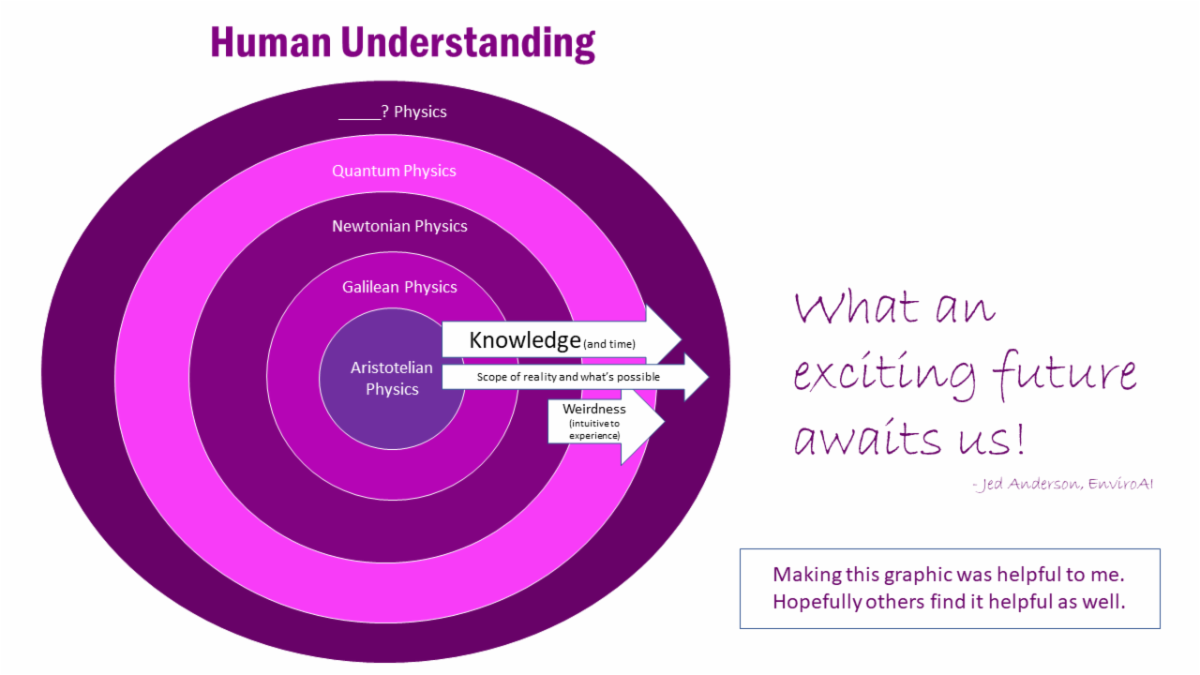

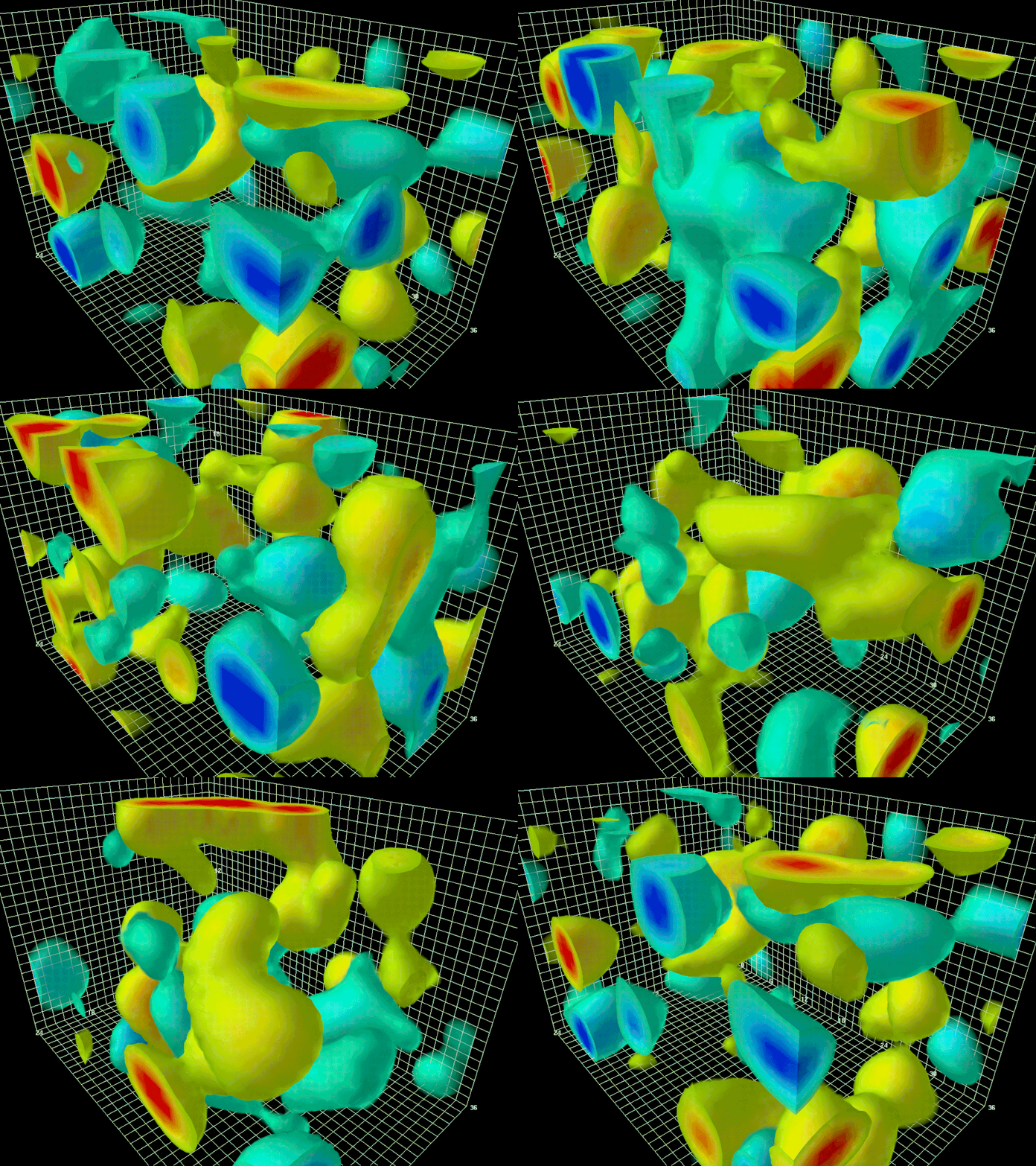

“Aristotelian and Newtonian physics wasn’t found to be fundamental …

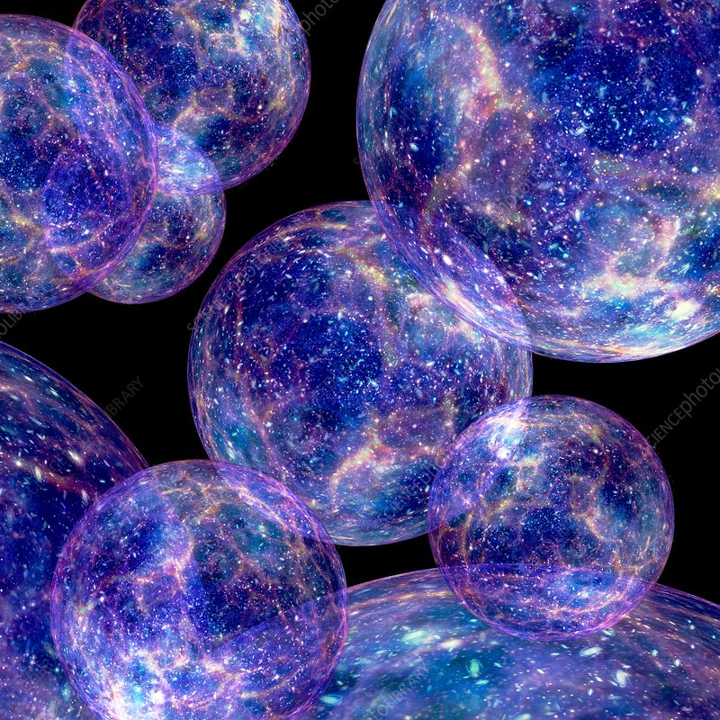
… just 1universe in the Universe?
… “I highly doubt it.”
- Jed Anderson
… does anything underly quantum physics?
… “I highly think so.”
- Jed Anderson

FUNDAMENTAL PHYSICS?
The continual iconoclastic evolution in our cosmological understanding …
-
Aristotelian Physics (345 BC)
-
Universe is made of 5 elements: earth, air, fire, water, and aether. Objects have natural motions: those of earth and water tend to fall; those of air and fire, to rise.
-
Galilean Physics (1592)
-
Galileo determines first laws of motion by experimentation
-
Develops the concepts of: velocity, force, and inertia
-
natural state of motion is uniform motion or rest
-
objects fall at same rate regardless of mass
-
Keplerian Physics (1609)
-
Kepler produces first kinematic description of orbits
-
Each object moves in an elliptical orbit
-
Newtonian Physics (“Classical Physics” (1687)
-
Newton provides dynamical description of universe, using:
- acceleration
- momentum
- conservation laws
[Jed description: Everything on an xyz axis in space-time]
- Quantum Physics (“Modern Physics) (1931)
- Particles are waves and vice-versa
- Probability is all we ever know
- Measurement determines reality
[Jed description: Everything is probabilities]
- ______? (“Post-Modern” Physics)(____)

Reverse Engineering the Universe
---“I think physics is about done with reductionism. It’s taken us a long way, but the next jump in physics I think will unleash much higher levels in imaginative heuristics.”- Jed Anderson

---“As usual, nature’s imagination far surpasses our own, as we have seen from the other theories which are subtle and deep.” - Richard Feynman

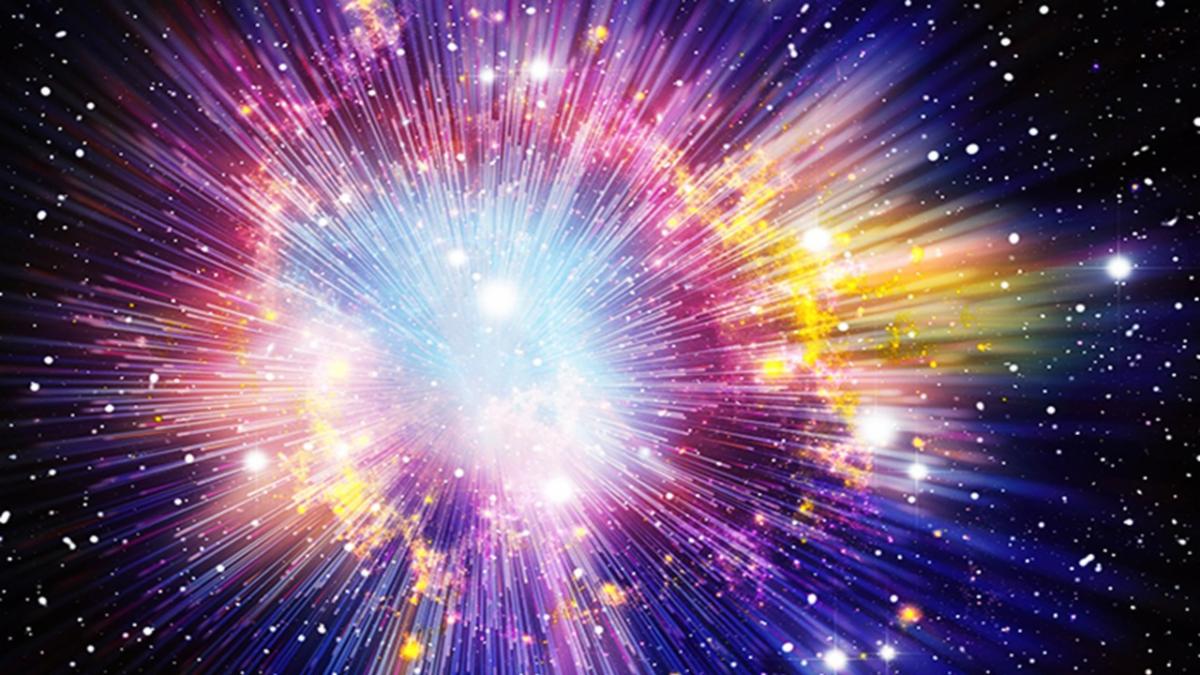

FUNDAMENTAL UNIVERSE?
The continual iconoclastic evolution in our cosmological understanding …
- Our Earth is round not flat (this notion of a round earth is contrary to intuition and most of our everyday experience) - 500 B.C. (Pythagorus) [Eratosthenes calculated circumference in 240 B.C. and of course Columbus didn’t sail off the edge of the earth when he tried it almost 2000 years later]
- Our Earth isn’t the center of the universe[earth rotates around the sun] - 240 B.C. (Aristarchus) [Calculations by Copernicus in 1532 and astronomical observations by Galileo in 1632]
- Our sun isn’t the center of the universe[stars are other suns] - 450 B.C. (Anaxagoras) [Bruno in 1584 and then Angelo Secchi proved through spectroscopy in 1860]
- Our galaxy isn’t the center of the universe - 964 (Azophi) [Later Kant, Messier, Shapley, and finally Edwin Hubble … January 1, 1925”The day we discovered the universe”]
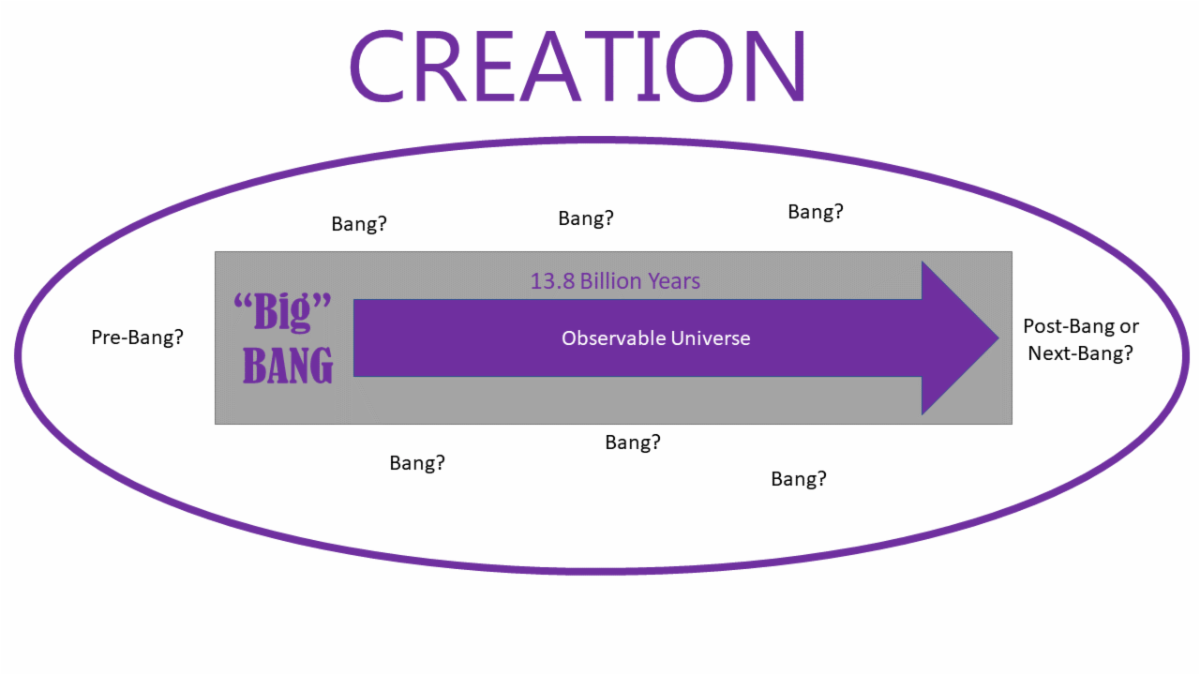
- Our universe isn’t the center of the Universe [or Multiverse]- _____?

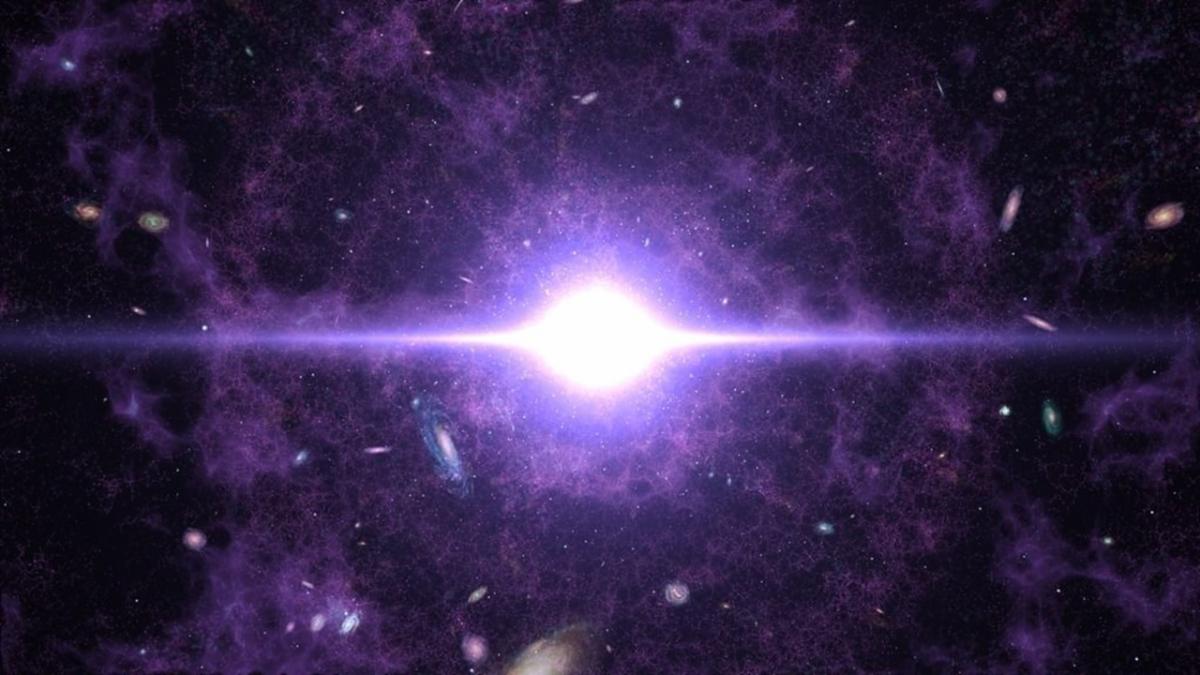
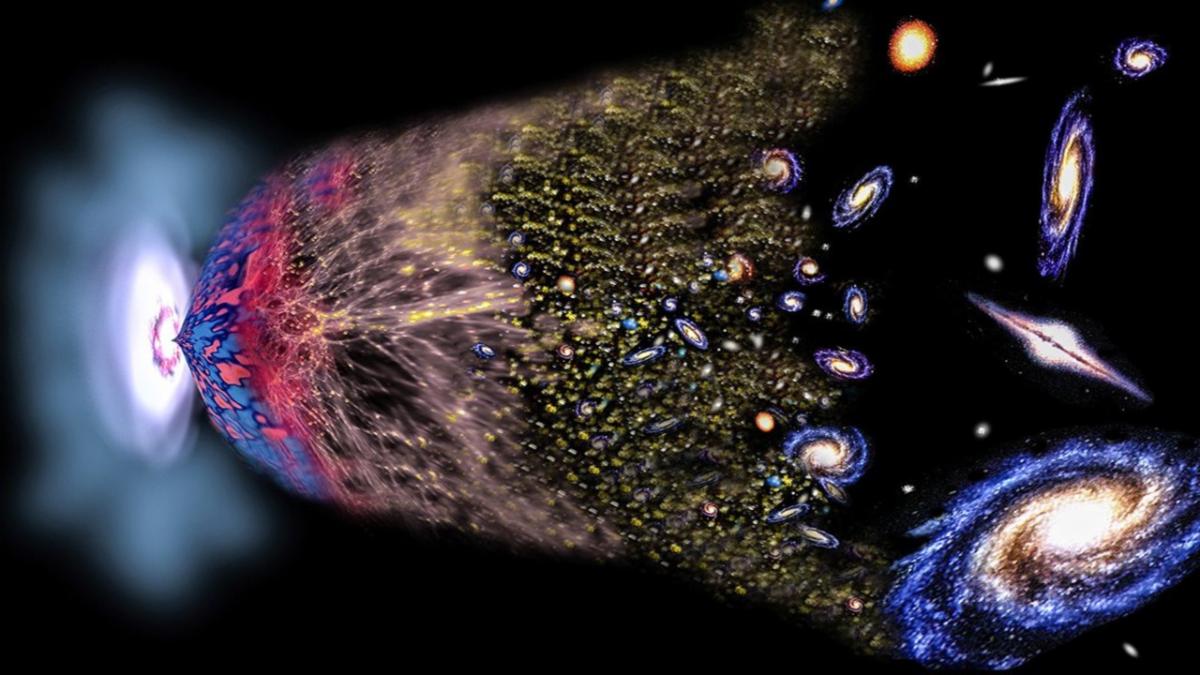
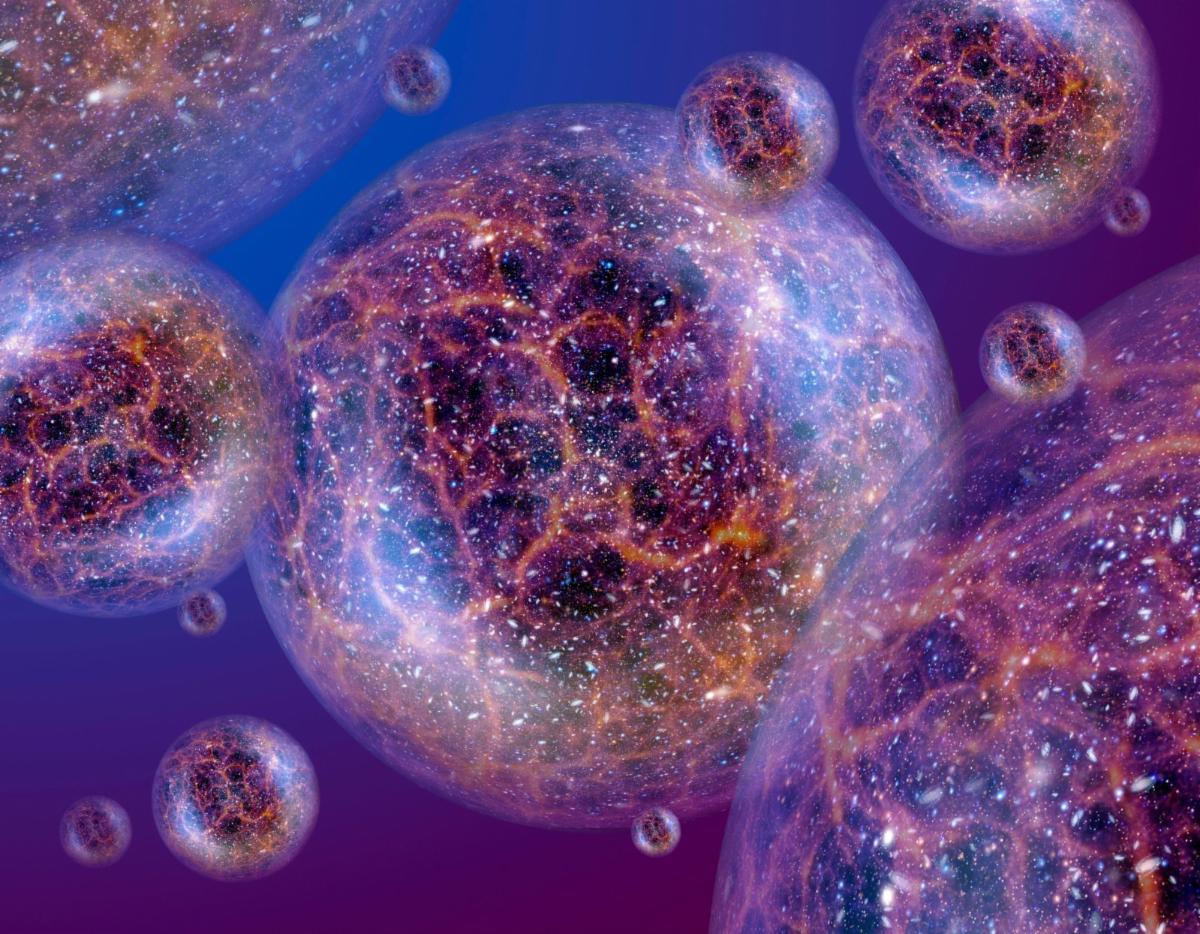
… “To think that our big bang was the only bang would seem at this point to me to be a bit narrow-minded, anthropocentric, andin contradiction to the continual iconoclastic evolution in our cosmological understanding.”
- Jed Anderson, EnviroAI
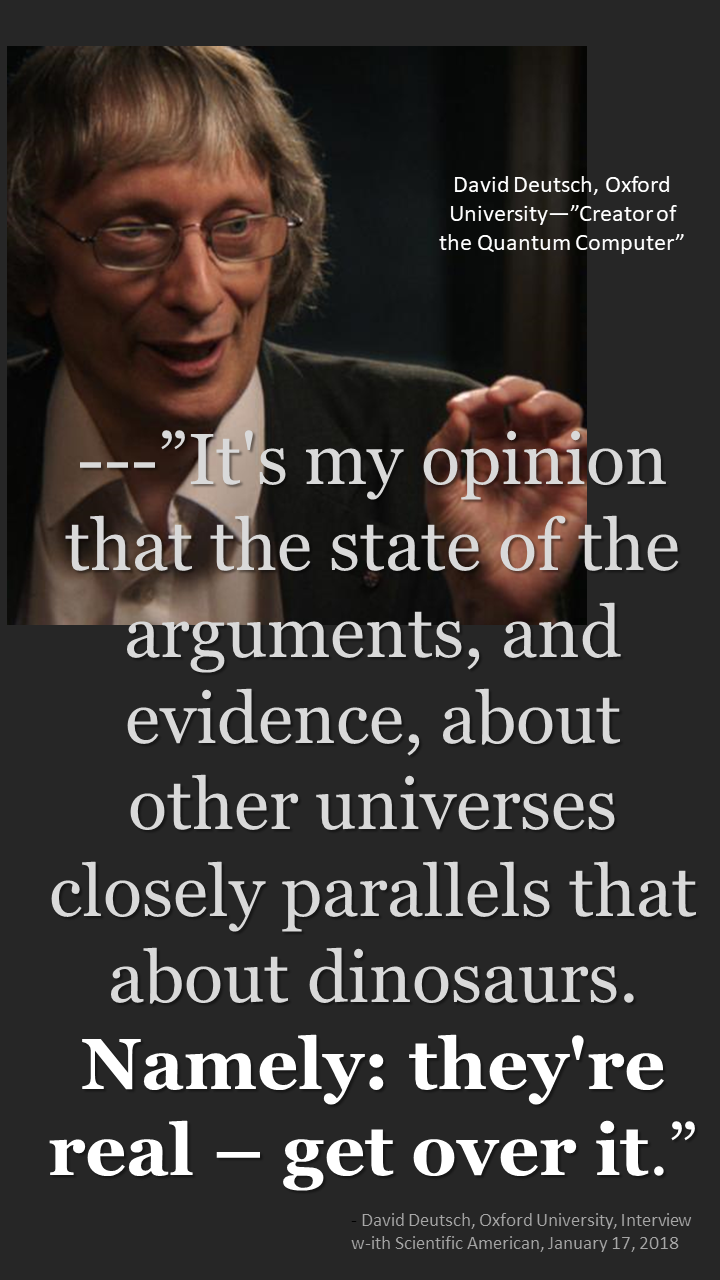


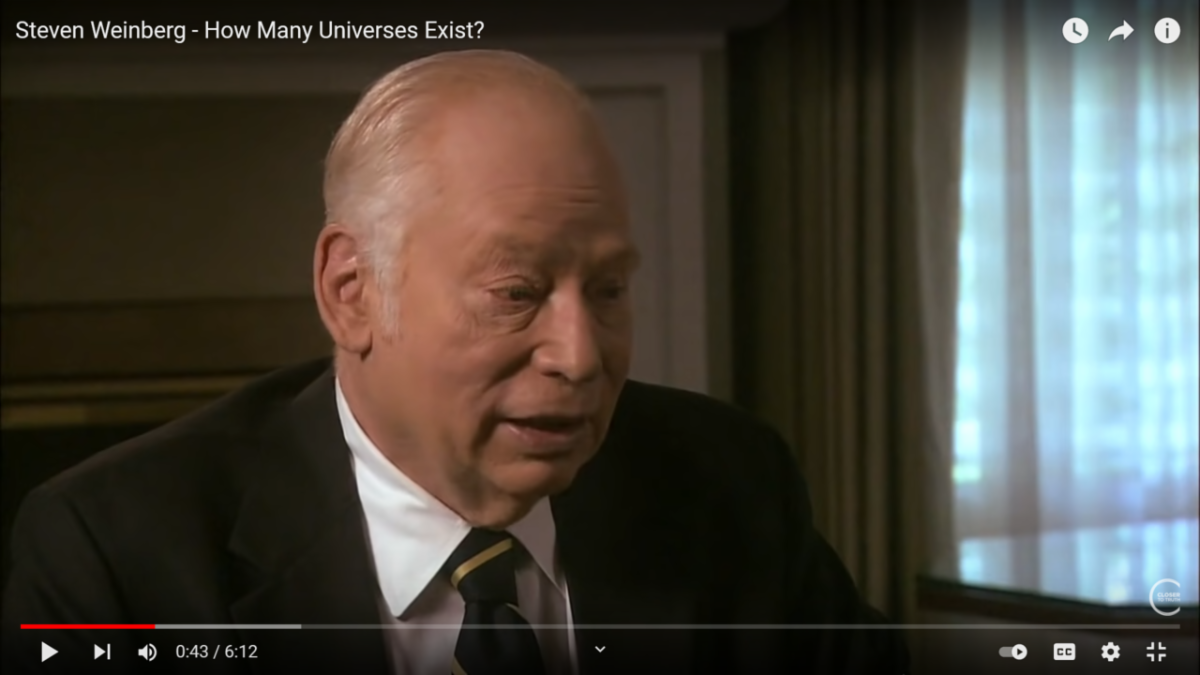


How many universes?Interview with Steven Weinberg, recently deceased University of Texas Professor and Nobel Prize Winner in Physics.


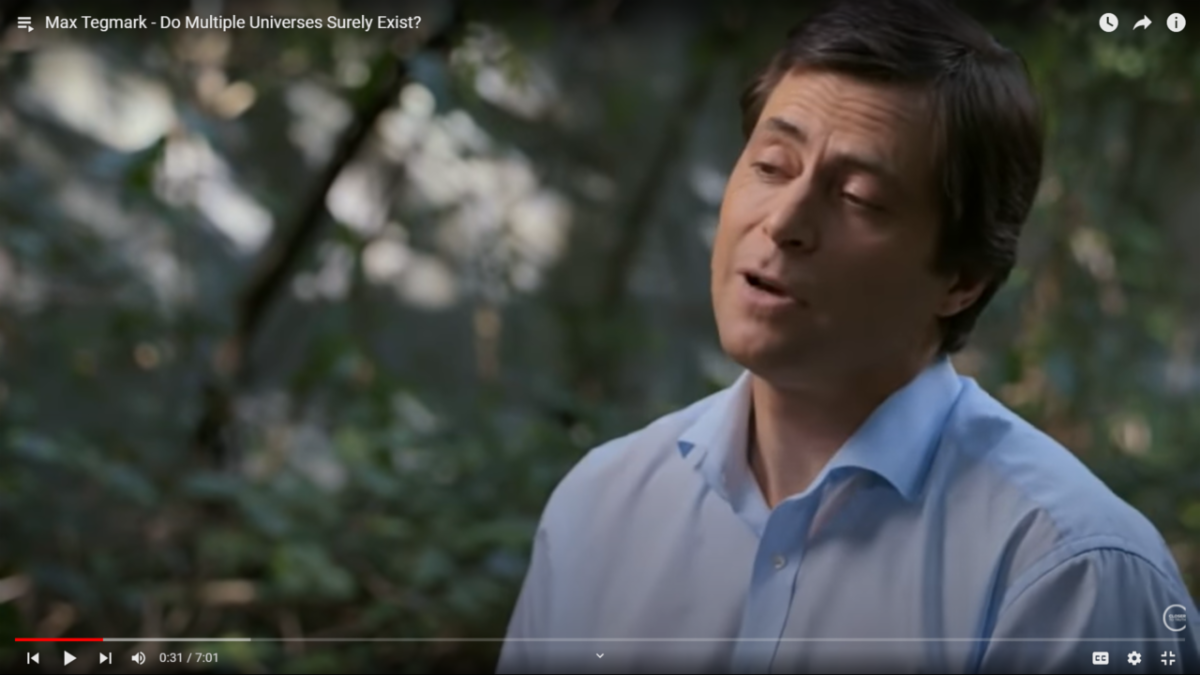


How many universes? Interview with Max Tegmark, MIT Professor of Physics.



Licensed CC-BY-4.0 .
Original source: Constant Contact campaign
Markdown source: https://jedanderson.org/posts/fundamental.md
Source on GitHub: /src/content/posts/fundamental.md
Cite this
@misc{anderson_2022_fundamental,
  author = {Jed Anderson},
  title  = {Fundamental?},
  year   = {2022},
  url    = {https://jedanderson.org/posts/fundamental},
  note   = {Accessed: 2026-09-15}
} Anderson, J. (2022). Fundamental?. Retrieved from https://jedanderson.org/posts/fundamental
Anderson, Jed. "Fundamental?." Jed Anderson, June 14, 2022, https://jedanderson.org/posts/fundamental.