Essay
Planetary Dead Time: Overcoming the Hundred-Billion-Fold Control Gap in Environmental Stewardship
Jed Anderson, EnviroAI, July 20, 2026.
Abstract. For a century, the failure to protect the biosphere has been diagnosed as a deficit of political will, economic foresight, or human empathy. The present analysis proposes a fundamentally different mechanism: a profound failure of speed. Every instance of environmental degradation is governed by a basic physical control loop—sense, transmit, understand, decide, act. Historically, the velocity of this loop was hard-capped by the biological limits of human communication (which stabilizes near 39 bits per second) and the resulting institutional friction, creating a structural delay defined herein as Planetary Dead Time. Control theory dictates that a regulatory loop slower than the disturbance it seeks to manage cannot stabilize a system; it induces phase lag that amplifies the disturbance rather than damping it. Today, the convergence of ubiquitous, low-cost Internet of Things (IoT) sensing and machine-speed inference via artificial intelligence (AI) foundation models has collapsed this historical bottleneck. For the first time in Earth’s history, the technological architecture exists to respond to ecological disturbances at the speed of the physics that drive them, effectively functioning as a planetary nervous system. This transition marks the evolution of environmental protection from a forensic science of post-hoc remediation to a real-time, autonomous stabilizing force.
I. The Illusion of Moral Failure
A forest can burn for a week before the stewards of the valley learn its name. A river can carry a toxic plume past a hundred municipalities before the first water quality sample reaches a laboratory. A species can slip from vulnerable to extinct in the years it takes a regulatory agency to finalize a biological opinion. Across the history of environmentalism, these catastrophes have been subject to intense ethical and economic debate. Society has spent fifty years arguing over what to protect and how much it is worth, frequently diagnosing systemic failures as a lack of funding, political courage, or collective love for the natural world.
Yet, underneath every environmental catastrophe in history lies a single, unacknowledged physical quantity. It is not the scale of the harm, nor the cost of the repair. It is the delay. There is a measurable interval between the moment a living system is wounded and the moment any entity capable of helping it registers the wound, processes the data, and moves to intervene. This structural delay operates precisely as “dead time” does in industrial control systems—a period during which a change in a manipulated variable produces no observable effect in the process variable, leaving the system blind and unresponsive [1]. Every failure of environmental stewardship has been, at its root, a latency failure. The clock was never named, yet the clock dictated the entire outcome.
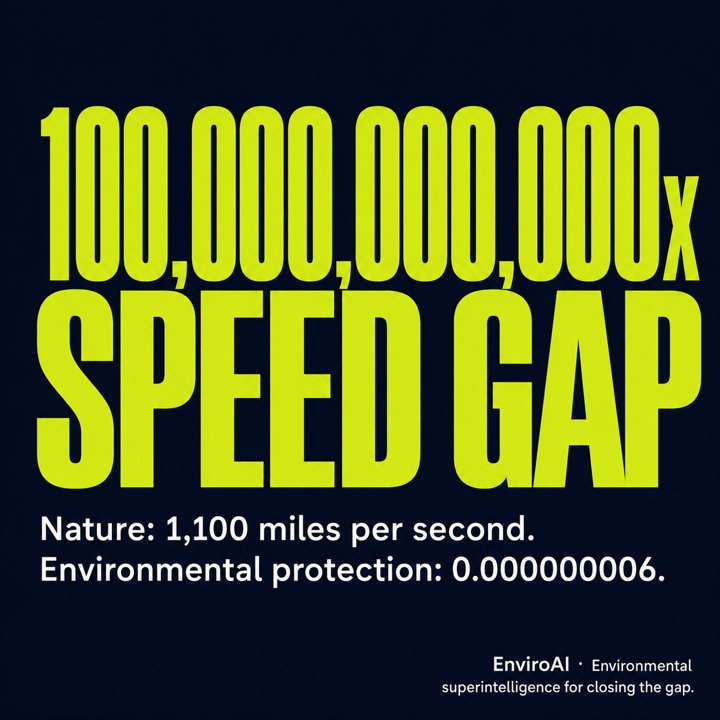
If the biosphere is understood not as a static painting to be preserved, but as a highly dynamic, non-linear thermodynamic system, then its protection is strictly a matter of control theory. Nature’s physical and chemical reactions move at blinding speeds, with stellar and atmospheric phenomena frequently reaching velocities of 1,100 miles per second [3]. Against the speed of physical and chemical reactions, the historical velocity of environmental protection has operated at a fraction of a crawl—metaphorically, 0.000000006 miles per second. This hundred-billion-fold speed gap is the true, underlying adversary of conservation. To close this gap requires stripping away the sentimentality of stewardship and analyzing the physical architecture of the biospheric control loop.
II. The Architecture of the Biospheric Control Gap
Environmental protection operates as a physical control loop, identical in structure to a biological reflex arc or an industrial proportional-integral-derivative (PID) controller. Whether the system is a hand pulling away from a hot stove or a global treaty eliminating chlorofluorocarbons, the mechanism of stewardship strictly requires five sequential stages.
| Loop Stage | Function | Historical Mechanism | Modern Technological Mechanism |
|---|---|---|---|
| Sense | Detect that the physical world has changed. | Manual sampling, field observations, intermittent expeditions. | IoT sensors, multispectral satellite imagery, passive acoustic monitoring. |
| Transmit | Move the signal to a processing center. | Mail, physical transport, early telegraph. | Fiber optics, 5G networks, low-earth orbit (LEO) satellite constellations. |
| Understand | Interpret the signal against baseline conditions. | Human cognitive processing, manual data entry, legacy numerical simulations. | AI foundation models, machine learning anomaly detection, neural networks. |
| Decide | Formulate a response based on the interpretation. | Committee meetings, legislative sessions, peer review, public comment periods. | Automated policy triggers, AI agents, algorithmic decision matrices. |
| Act | Execute the physical intervention to stabilize the system. | Manual labor, physical remediation, legal enforcement. | Closed-loop automation, autonomous drones, actuated smart infrastructure. |
A loop has a clock, determined by the sum of the delays at every stage. Engineers who build life-critical systems—autopilots, pacemakers, power grids—understand that delay is not merely friction to be minimized. Past a certain threshold, delay acts as an impenetrable wall [1].
In classical control theory, the stability of a feedback loop is governed by the relationship between the system’s gain and its phase shift [2]. When a disturbance enters a system, the controller attempts to output a corrective signal. However, if the system contains significant dead time (transport delay), this corrective signal arrives late. Mathematically, a pure time delay τ introduces a phase lag φ(ω) = −ωτ that grows linearly with the frequency of the disturbance ω, without attenuating the amplitude of the signal [2].
This creates a perilous dynamic that distinguishes dead time from simple first-order lag. A lag time function’s phase shift asymptotically approaches −90°, eventually reducing the output signal amplitude [2]. By contrast, a dead time function’s phase shift grows linearly with frequency to −180° and beyond, while its attenuation remains unchanged [2]. This means a dead-time element in a feedback control loop is capable of producing any amount of phase shift given the right frequency, fulfilling the criteria needed for feedback oscillation [2].
A system that can observe and act only more slowly than the world it is steering does not steer that world weakly—it steers it backward. By the time a regulatory correction lands, the ecological reality has already shifted. The controller chases a state that no longer exists, pushing when it should pull. When the phase lag reaches −180° at a frequency where the loop gain is greater than or equal to 1, the system satisfies the Nyquist stability criterion for oscillation [7]. The regulatory feedback, intended to stabilize the environment, becomes a positive feedback loop that amplifies the destruction.
There is no budget large enough, no legislative mandate fierce enough, and no public outcry loud enough to buy back phase margin already lost to delay. One can only shorten the loop [1]. Underneath a century of environmentalism sat a regulatory loop whose dead time ran longer than the ecological disturbances it existed to correct. By the strict mathematics of feedback control, paper-based stewardship was defeated before it began.
III. The Biological Bottleneck: The 39-Bit Speed Limit of Language
To understand why the planetary control loop ran so slowly for so long, one must examine the biological hardware of the species attempting to operate it. For most of history, the “Understand” and “Decide” stages of the environmental control loop were entirely dependent on human cognition and human communication.
In 2019, an extensive linguistic study measured the information density carried by human speech across seventeen distinct languages, encompassing nine language families with vast typological differences [9]. The researchers evaluated languages ranging from Japanese and Spanish, which feature high syllabic rates and relatively simple syllable structures, to Thai and Vietnamese, which feature complex tonal structures and lower syllabic rates [10]. The expectation was that different languages would transmit information at substantially different speeds depending on their grammatical and phonetic complexity.
Instead, the analysis revealed a biological constant. A strict trade-off exists between syllabic rate and information density: languages that pack less information into each syllable compensate by being spoken faster, while information-dense languages are spoken more slowly [11]. Regardless of the language spoken, human speech converges on an average information transmission rate of approximately 39.15 bits per second [9].
| Language | Syllables per Second | Information Density (Bits/Syllable) | Average Information Rate (Bits/Second) |
|---|---|---|---|
| Japanese | ~8.0 | Low | ~39 |
| Spanish | ~7.7 | Low | ~39 |
| English | ~6.2 | Medium | ~39 |
| Mandarin | ~5.2 | High | ~39 |
| Vietnamese | ~5.3 | High | ~39 |
| Thai | ~4.7 | High | ~39 |
This 39-bit-per-second limit is deeply tied to human neurophysiology, corresponding closely to the theta rhythms (4–8 Hz) of cortical oscillations that govern speech perception and production [11]. Theta oscillations act as an intrinsic timing mechanism that coordinates the distributed and synergistic motor control underlying fluent speech [15]. It is a fundamental property of the human animal, an evolutionary hard limit on how quickly one mind can share complex information with another [9].
To contextualize this throughput, the first commercially successful computer modem, built in 1959, operated at 110 bits per second [9]. A modern home broadband connection runs at hundreds of millions of bits per second. Human language—the very instrument used to build civilization, draft treaties, and attempt planetary management—moves slower than obsolete mid-20th-century hardware.
This was the narrow wire through which the survival of the biosphere was routed. Every environmental law was a sentence before it was a statute. Every alarm raised by a climate scientist or field ecologist had to be forced, bit by slow bit, through the 39-bit aperture of speech and text into another human skull, and then the next, until enough minds held the concept simultaneously to force collective action.
IV. Institutional Friction and the Speed of Paper
When this biological communication bottleneck was scaled up to the level of human institutions, the latency expanded from seconds to decades. Environmental governance frameworks, such as the temporal Driver-Pressure-State-Impact-Response (tDPSIR) model, illustrate how these delays manifest in policy [17]. In the tDPSIR framework, significant time lags exist between the initiation of an anthropogenic pressure (e.g., plastic pollution, greenhouse gas emissions, or land-use intensification) and the formulation of an effective governance response capable of altering the socio-ecological state [18].
These institutional delays are staggering, converting biological constraints into structural administrative paralysis. In the United States, the Clean Air Act (CAA) of 1970 established the framework for regulating hazardous emissions through National Ambient Air Quality Standards (NAAQS) [21]. The statute technically requires the Environmental Protection Agency (EPA) to review the NAAQS every five years to ensure they reflect current scientific consensus [24]. However, the journey from epidemiological evidence of harm to the enforcement of a new standard is fraught with immense friction. It involves extensive peer review by the Clean Air Scientific Advisory Committee (CASAC), multi-year public comment periods, interagency review by the Office of Management and Budget (OMB), and inevitable litigation from both industry and environmental groups [23]. For instance, when the EPA proposed revising the primary PM2.5 (fine particulate matter) annual standard from 12.0 µg/m³ to 9.0 µg/m³, the process spanned years of bureaucratic maneuvering, ultimately resulting in federal lawsuits claiming the EPA failed to conduct a “thorough review” or meet implementation deadlines for nonattainment area designations [25]. As a result of this friction, a national air-quality standard can take two to three decades to travel from initial scientific discovery to factory-floor enforcement [26].
Similar delays plague the National Environmental Policy Act (NEPA). While intended as a preventative “look before you leap” statute, the preparation of an Environmental Impact Statement (EIS) introduces massive dead time into infrastructure and conservation projects [28].
| Federal Action / Permit Type | Median Review Time (Months) | Source Delay Factors |
|---|---|---|
| Categorical Exclusions (CE) | 0.95 | Minimal review, routine actions. |
| Endangered Species Act (FWS) | 7.90 | Biological consultation requirements. |
| Bureau of Land Management ROW | 11.90 | Land surveying, stakeholder alignment. |
| Non-Federal Hydropower License | 33.00 | Complex ecological mapping, multi-agency jurisdiction. |
| NEPA Environmental Impact Statement (EIS) | 41.20 | Thousands of pages of analysis, litigation risk, public comment. |
| Bureau of Indian Affairs ROW | 43.80 | Complex jurisdictional negotiations. |
| Natural Gas Export Authorizations | 73.10 | Geopolitical and heavy environmental footprint analysis. |
Data reflecting median infrastructure permitting timelines under FAST-41 and NEPA frameworks [30].
The median EIS takes 41.2 months to complete, with some reviews stretching over a decade due to exogenous factors such as budgetary constraints, lack of interagency coordination, and the sheer volume of manual data processing required to assess acoustic, hydrological, and biological impacts [28]. While legislative efforts like FAST-41 have attempted to streamline these timetables, the fundamental dead time remains endemic to any system reliant on human cognitive processing and consensus-building [29].
The biosphere does not grant three decades for a regulatory response. A coral reef bleaches in a fortnight. A toxic algal bloom decimates a fishery in a single season. Heavy metals cross the blood-brain barrier of a developing child in an afternoon. The physical world breaks at the speed of chemistry and physics, yet humanity attempted to answer at the speed of human language and paper bureaucracy.
V. The Evolutionary Precedent: Escaping the Diffusion Limit
The current crisis of planetary management is not without precedent. Life on Earth has encountered and solved this exact latency problem once before, fundamentally altering the trajectory of biological evolution.
For the first three billion years of life, single-celled organisms and early multicellular clusters relied exclusively on chemical signaling for communication. When a cell needed to transmit a signal to its neighbor, it released a molecule into the extracellular space and waited for it to arrive via chemical diffusion [31].
The physics of diffusion are strictly governed by Fick’s Second Law, a partial differential equation that predicts how concentration gradients change over time:
∂C/∂t = D · ∂²C/∂x²
where C is the concentration, t is time, x is position, and D is the diffusion coefficient [33]. The most critical mathematical consequence of Fick’s Second Law is that the time t required for a particle to diffuse a given distance x scales with the square of that distance (t ∝ x²) [33]. For small ions with a diffusion coefficient of approximately 10⁻⁹ m²/s, traversing a 10-micrometer cell takes milliseconds. However, to traverse a distance of 10 centimeters via pure diffusion would take nearly two months, and traversing one meter would take over 15 years [33].
While diffusion is highly efficient over microscopic distances, the squared-distance relationship imposes a brutal, exponential penalty on size [36]. As an organism grows larger, relying on chemical diffusion becomes mathematically untenable [32]. A creature built solely of diffusing signals cannot coordinate its extremities fast enough to flee a predator or strike at prey. The organism cannot act as a unified entity because its sensory inputs are too far separated in time from its motor outputs.
To overcome this latency wall, life evolved the nervous system approximately 600 million years ago [32]. The neuron, and specifically the action potential, is fundamentally a latency-reduction technology [31]. Instead of waiting for molecules to drift randomly across a concentration gradient, neurons utilize voltage-gated sodium (Na⁺) and potassium (K⁺) channels to rapidly propagate an electrical spike along an axon [37].
An action potential is characterized by a rapid depolarization—where the membrane potential shoots from a resting state of roughly −70 mV past a threshold to a peak of +40 mV in roughly two milliseconds—followed by immediate repolarization and a refractory period [37]. This mechanism allowed signal transmission speeds to jump from microscopic crawls to velocities up to 100 meters per second in myelinated mammalian nerve fibers [38].
The evolution of the nervous system did not give animals new sensory organs or stronger muscles; it simply issued them a shorter control loop. By compressing the time between sensing and acting, it allowed massive, complex bodies to behave as a single, unified, responsive self, capable of pulling a hand from a flame before the conscious mind even registers the heat [38].
The Earth’s biosphere today is functionally analogous to a massive body that has never possessed a central nervous system. Trillions of biological sensors exist—leaves tracking photosynthetically active radiation, root networks detecting soil chemistry, plankton reacting to ocean temperatures—but there has been no fast channel to carry this flood of sensation to anything capable of responding on the planet’s behalf [32].
Humanity currently acts as the planet’s stewards, but by relying on the diffusion-like crawl of human speech and paper-based bureaucracy, society functions like a giant, uncoordinated, chemically-signaling organism [9]. To survive, the biosphere requires the equivalent of a spinal cord. It requires a technological nervous system that shrinks the distance in time between planetary sensing and planetary response.
VI. The Collapse of the Gap: Transmit and Sense
A serial control loop is only as fast as its slowest component. The five stages of planetary management did not accelerate all at once; they fell sequentially over the last two centuries, setting the stage for the current technological singularity in environmental stewardship.
The “Transmit” stage fell first. Beginning in the mid-19th century with the telegraph, and culminating in modern fiber optics and wireless networks, humanity accelerated the transmission of data from the speed of a galloping horse to within a rounding error of the speed of light.
The “Sense” stage fell next, driven by the explosive growth of the Internet of Things (IoT) and satellite earth observation [42]. The global IoT sensors market, valued at $23.9 billion in 2025 with an estimated 879.1 million units deployed, is projected to reach $549.2 billion by 2035 [42]. This growth is driven by massive cost reductions and miniaturization in microelectromechanical systems (MEMS), CMOS image sensors, and the widespread adoption of low-power wide-area networks (LPWAN) such as LoRaWAN and NB-IoT [42].
Today, environmental sensing is ubiquitous and continuous. Environmental monitoring markets are rapidly transitioning from manual intermittent sampling to continuous automated networks [43]. Passive and active monitors track atmospheric pollutants, soil moisture, and acoustic disturbances in real-time [43]. Over 61% of environmental agencies now utilize automated sensors for continuous data collection, and 69% of these systems integrate IoT-enabled devices for real-time telemetry [45]. The physical constraints and exorbitant costs of gathering environmental data have been largely eradicated, enabling continuous data collection that far surpasses historical capabilities [46].
VII. Overcoming the “Understand” Bottleneck: AI and Thermodynamics
Despite the availability of real-time data, the planetary control loop remained open because the third stage—“Understand”—refused to yield. Raw planetary data is not knowledge. For decades, converting exabytes of raw sensor telemetry into an accurate, actionable forecast required either human analysts (processing at 39 bits per second) or legacy physics-based numerical weather prediction (NWP) models [11].
Traditional NWP models, while powerful, are computationally exhausting. They rely on solving complex, coupled differential equations representing fluid dynamics and thermodynamics on massive national supercomputers [48]. Even with state-of-the-art infrastructure, these simulations take hours to run, introducing significant transport delay into the decision-making loop and consuming vast amounts of energy [49].
In the current decade, this final bottleneck has collapsed, driven by the advent of AI foundation models for the Earth system [48]. Models such as Microsoft’s Aurora and Google’s GenCast have demonstrated the ability to process atmospheric and ecological data at unprecedented speeds [51].
Aurora, a 1.3-billion parameter 3D Swin Transformer model, was pre-trained on over one million hours of diverse geophysical data [48]. Unlike legacy models that require calculating physics equations step-by-step, Aurora learns the underlying physical representations directly from the data. The results published in Nature indicate that Aurora outperforms the best operational physics-based models—such as the ECMWF’s Integrated Forecasting System (IFS)—across the majority of standard skill measures [48].
More importantly for the control loop, AI foundation models execute these forecasts at a fraction of the computational cost and time. Aurora can generate 5-day global air pollution predictions approximately 100,000 times faster than the traditional Copernicus Atmosphere Monitoring Service (CAMS), taking mere seconds instead of hours [49]. Furthermore, the introduction of probabilistic ensemble forecasting in models like Aurora 1.5 allows for the rapid quantification of uncertainty. The ensemble approach introduces stochastic perturbations to represent model uncertainty, outperforming state-of-the-art dynamical ensembles on 88.9% of evaluated targets [48].
| Forecasting Approach | Computational Speed | Performance vs Legacy | Primary Limitation |
|---|---|---|---|
| Traditional NWP (e.g., ECMWF) | Hours (Supercomputer) | Baseline | High latency, massive computational cost. |
| AI Foundation Models (e.g., Aurora) | Seconds (Standard GPU) | Outperforms on >88% of targets | Requires massive initial pre-training data. |
| Diffusion-based Ensembles (e.g., GenCast) | Seconds | Superior uncertainty quantification | Requires traditional data assimilation for initial conditions. |
The shift from human cognition and brute-force physics simulation to AI inference represents a fundamental thermodynamic optimization. The ultimate floor for the speed and energy cost of understanding is defined by Landauer’s limit [53].
In 1961, Rolf Landauer demonstrated that the minimum energy required to irreversibly erase one bit of information in a computational system is bounded by:
E ≥ k_B · T · ln 2
where k_B is the Boltzmann constant and T is the absolute temperature of the environment [55]. At room temperature (approx. 300 K), this equates to roughly 2.9 × 10⁻²¹ Joules per bit [53]. While modern hardware operates well above this limit, the theoretical insight holds profound implications for environmental management: information processing requires orders of magnitude less energy than physical manipulation [54]. The energy required to move a bit of information across a neural network to detect a pipeline leak is infinitesimal compared to the millions of Joules required to operate heavy machinery to excavate contaminated soil. Knowing is thermodynamically cheap, and knowing is incredibly fast. By shifting the burden of understanding from physical simulations and human bureaucracy to highly optimized AI inference engines, the time required to understand an environmental disturbance drops from months or hours to milliseconds, capitalizing on this fundamental bond-bit asymmetry.
VIII. Redesigning the Control Loop: The Smith Predictor and AI Agents
With sensing and understanding now occurring at machine speed, the architecture of environmental stewardship can transition from reactive forensics to proactive, real-time control. This requires the implementation of advanced control strategies, historically used in aerospace and industrial engineering, applied at a planetary scale.
When a control system contains unavoidable dead time, engineers utilize a topology known as the Smith Predictor [58]. The Smith Predictor mitigates phase lag by separating the time delay from the closed-loop dynamics [58]. It uses a mathematical model of the plant to simulate how the system will respond to a control action without the delay. By feeding this instantaneous prediction back to the controller, the Smith Predictor allows the system to act on the estimated current state of the environment, rather than reacting to delayed, outdated measurements [59]. For example, in optoelectronic tracking systems, the application of a Smith Predictor significantly improves tracking and anti-interference performance by bypassing the transport delay [58].
AI foundation models act as the ultimate Smith Predictor for the biosphere. By leveraging continuous IoT sensor data and generating highly accurate, machine-speed forecasts, AI systems predict the trajectory of an ecological disturbance—such as a toxic spill, a wildfire, or an air pollution event—faster than the disturbance can propagate [48].
To operationalize this, environmental management is increasingly deploying AI agents designed for real-time anomaly detection [61]. Using unsupervised learning techniques like Isolation Forests, support vector machines (SVMs), or dynamic Z-score evaluations, these systems ingest continuous telemetry from environmental sensors [63]. When a data point diverges significantly from established baseline patterns (e.g., a sudden spike in dissolved agricultural runoff, or localized thermal anomalies indicative of an illegal burn), the AI agent instantly flags the event [62].
This effectively establishes a “response shift-left” mechanism within the temporal DPSIR (tDPSIR) framework [18]. By pulling the detection and understanding phases to the earliest possible moment in the timeline—before human cognition is even engaged—the AI agent allows intervention to occur before the “Pressure” degrades the “State” of the ecosystem into irreversible “Impact” [18].
In this new paradigm, the role of the human environmental professional undergoes a radical elevation. A hundred brilliant environmental managers wired together by meetings will always remain a slow communication channel capped at 39 bits per second [10]. The speed of detection and understanding must come from the machine, because physics permits nothing else. Humans stop acting as the bottleneck in the data-processing loop and are elevated to provide the executive judgment, ethical oversight, and physical authorization above it [62].
IX. Conclusion: Action Preceding Ruin
For a century, protecting the environment meant finding out late and paying the price in physical matter: the deployment of heavy scrubbers, the hauling of contaminated soil, the signing of consent decrees after the ecosystem had already collapsed. This cost felt like an immutable law of nature. It was not. It was simply the tax on Planetary Dead Time.
If a leak in a pipeline can be answered in the minute it opens, rather than during the lawsuit it eventually provokes; if an algal bloom can be caught at its first cellular proliferation, rather than at its first mass fish-kill; if a dying reef can be registered while it can still be cooled or shaded, then the structurally impossible becomes routine.
The biosphere built humanity the way a developing embryo grows the cell that will eventually become its first neuron—blind to what it was reaching for, driven only by the evolutionary mandate to feel and respond to itself faster [31]. The vast global network of sensors, connected by light-speed fiber optics, and interpreted by AI foundation models, is not an unnatural imposition on the planet. It is the necessary completion of the planet’s own nervous system.
The direction of this evolution is not merely a preference; it is dictated by the rigid mathematics of control theory. You cannot stabilize a rapidly changing planet with a slow controller [1]. The loop must become fast enough, or it will not regulate at all.
For four billion years, the time between environmental harm and systemic help was infinite. For the last fifty years, bounded by the limits of human speech and bureaucracy, it was measured in decades. Today, the latency of environmental care is collapsing toward the thermodynamic floor set by light and heat. We are the generation tasked with closing the loop, providing the Earth, for the first time in its history, the capacity to flinch from harm before the harm is permanent.
Works cited
- Process Dynamics - Deadtime and simple lags - Michael Brown Control Engineering CC, http://www.controlloop.co.za/ls/ls4/ls4.htm
- Dead time - Inst Tools, https://instrumentationtools.com/dead-time/
- Performance and Accountability Report - 2004 - NASA, https://www.nasa.gov/wp-content/uploads/2023/04/nasa-fy-2004-performance-and-accountability-report.pdf
- (PDF) BISL 04 - Weather and Climate - Academia.edu, https://www.academia.edu/37306636/BISL_04_Weather_and_Climate
- Fastest-ever star discovered orbiting Milky Way’s supermassive black hole - CNET, https://www.cnet.com/science/fastest-ever-star-discovered-orbiting-milky-ways-supermassive-black-hole/
- Deadtime versus Lag - Control Notes, https://blog.opticontrols.com/dead-time-versus-time-constant/
- Control system with feedback time delay - EEVblog, https://www.eevblog.com/forum/projects/control-system-with-feedback-time-delay/
- Understanding Dead-Time Systems in Control Theory | by Buğra Avcı - Medium, https://medium.com/@mbugraavci38/understanding-dead-time-systems-in-control-theory-d29ef9a030d9
- Different languages, similar encoding efficiency: Comparable information rates across the human communicative niche - PMC, https://pmc.ncbi.nlm.nih.gov/articles/PMC6984970/
- Different languages, similar encoding efficiency: Comparable information rates across the human communicative niche - ResearchGate, https://www.researchgate.net/publication/335633446_Different_languages_similar_encoding_efficiency_Comparable_information_rates_across_the_human_communicative_niche
- Different Languages Convey Information At Similar Rates - Asian Scientist Magazine, https://www.asianscientist.com/2019/11/in-the-lab/language-information-transmission-rate/
- Information encoding and transmission profiles of first-language (L1) and second-language (L2) speech - CDN, https://bpb-us-e1.wpmucdn.com/sites.northwestern.edu/dist/4/9189/files/2026/04/2022-Bradlow_BLC.pdf
- Study suggests that no matter how fast or slow people speak in different languages the rate of information transfer is the same | cApStAn, https://www.capstan.be/study-suggests-that-no-matter-how-fast-or-slow-people-speak-in-different-languages-the-rate-of-information-transfer-is-the-same/
- Relationship between SR and ID across languages Colors represent the… - ResearchGate, https://www.researchgate.net/figure/Relationship-between-SR-and-ID-across-languages-Colors-represent-the-language-families_fig2_335633446
- Sensorimotor Theta Oscillations Coordinate Speech Movements - PMC - NIH, https://pmc.ncbi.nlm.nih.gov/articles/PMC12632566/
- Speech is defined by theta-gamma coupled acoustic rhythms, mapped onto segregated populations in human early auditory cortex | bioRxiv, https://www.biorxiv.org/content/10.1101/2025.10.22.683926v2.full-text
- Time Lags in Environmental Governance – a Critical Review | Request PDF - ResearchGate, https://www.researchgate.net/publication/377314284_Time_Lags_in_Environmental_Governance_-_a_Critical_Review
- Introducing a temporal DPSIR (tDPSIR) framework and its application to marine pollution by PET bottles - PMC, https://pmc.ncbi.nlm.nih.gov/articles/PMC10160259/
- Introducing a temporal DPSIR (tDPSIR) framework and its application to marine pollution by PET bottles - PubMed, https://pubmed.ncbi.nlm.nih.gov/36547855/
- Unveiling climate resilience of Lake Guidimouni: an integrated DPSIR (drivers–pressures–state–impact–response)–GIS framework for water dynamics, vegetation productivity, and human impacts in the Zinder drylands (Niger) - Frontiers, https://www.frontiersin.org/journals/environmental-science/articles/10.3389/fenvs.2026.1726422/full
- Implementation of the Clean Air Act - Ballotpedia, https://ballotpedia.org/Implementation_of_the_Clean_Air_Act
- Clean Air Act (United States) - Wikipedia, https://en.wikipedia.org/wiki/Clean_Air_Act_(United_States)
- Clean Air Act - Global Energy Monitor, https://www.gem.wiki/Clean_Air_Act
- Regulatory Tracker - Environmental and Energy Law Program, https://eelp.law.harvard.edu/tracker-type/regulatory-tracker/
- National Ambient Air Quality Standards (NAAQS) for Particulate Matter (PM), https://eelp.law.harvard.edu/tracker/epa-finalized-stricter-national-ambient-air-quality-standards-naaqs-for-particulate-matter-pm/
- The Implementation Gap in Environmental Law, https://lawcat.berkeley.edu/record/1127546/files/fulltext.pdf
- Progress Cleaning the Air and Improving People’s Health | US EPA, https://www.epa.gov/clean-air-act-overview/progress-cleaning-air-and-improving-peoples-health
- Clearing the Path: Environmental Permitting in the Era of Renewed American Manufacturing, https://www.foley.com/insights/publications/2025/10/environmental-permitting-renewed-american-manufacturing/
- Permitting Reform and the Incidence of NEPA as a Source of “Delays”, https://progressivereform.org/cpr-blog/permitting-reform-and-nepa-as-source-of-delays/
- Federal Permitting Under FAST-41: Timelines, Coordination, and Sequence of Permits, https://regulatorystudies.columbian.gwu.edu/federal-permitting-under-fast-41-timelines-coordination-and-sequence-permits
- Evolutionary neuroeconomic adaptations of fast-spiking neurons in the human neocortex, https://www.frontiersin.org/journals/synaptic-neuroscience/articles/10.3389/fnsyn.2026.1741452/full
- Dynamics of neural activity in early nervous system evolution - PMC, https://pmc.ncbi.nlm.nih.gov/articles/PMC11694645/
- Fick’s laws of diffusion - Wikipedia, https://en.wikipedia.org/wiki/Fick%27s_laws_of_diffusion
- Diffusion Equation: Fick’s Laws of Diffusion - COMSOL, https://www.comsol.com/multiphysics/diffusion-equation
- Respiratory system: Fick’s law and oxygen diffusion in salmon (practice) - Khan Academy, https://www.khanacademy.org/test-prep/mcat/biological-sciences-practice/x04f6bc56:mcat-bio-biochem-foundation-3-passages/e/biological-adaptations-in-response-to-physical-constraints—the-case-of-atlantic-salmon
- Lecture 3: Introduction to Diffusion, https://www.phase-trans.msm.cam.ac.uk/mphil/MP6-3.pdf
- Action potential - Wikipedia, https://en.wikipedia.org/wiki/Action_potential
- Nervous system - Signaling, Neurons, Impulses | Britannica, https://www.britannica.com/science/nervous-system/Action-potential
- 1.13 Evolution of the Action Potential - MIT, https://web.mit.edu/~tkonkle/www/BrainEvolution/Meeting10/Pineada%20Chapter.pdf
- Mysteries of the action potential - The Physiological Society, https://www.physoc.org/magazine-articles/mysteries-of-the-action-potential/
- Factors influencing the latency of simple reaction time - Frontiers, https://www.frontiersin.org/journals/human-neuroscience/articles/10.3389/fnhum.2015.00131/full
- IOT Sensors Market Size, Share & Forecast, 2026-2035 - Global Market Insights, https://www.gminsights.com/industry-analysis/iot-sensors-market
- Environmental Monitoring Market Size, Share, Growth, Forecast, 2034, https://www.fortunebusinessinsights.com/environmental-monitoring-market-111995
- Emerging Trends in IoT Sensor Technology - PatSnap Eureka, https://eureka.patsnap.com/report-emerging-trends-in-iot-sensor-technology
- Environmental Sensing & Monitoring Market Trends, Size & Outlook 2035, https://www.businessresearchinsights.com/market-reports/environmental-sensing-and-monitoring-market-112794
- IoT for Environmental Monitoring: Reducing Costs and Enhancing Eco-Protection - Ignitec Bristol, https://www.ignitec.com/insights/iot-for-environmental-monitoring-reducing-costs-and-enhancing-eco-protection/
- Low-Cost IoT-Based Sensor System: A Case Study on Harsh Environmental Monitoring, https://pmc.ncbi.nlm.nih.gov/articles/PMC7795175/
- Aurora Forecasting - Microsoft Research, https://www.microsoft.com/en-us/research/project/aurora-forecasting/
- A foundation model for the Earth system - PMC - NIH, https://pmc.ncbi.nlm.nih.gov/articles/PMC12119322/
- Aurora 1.5: Extending open foundation models for weather and Earth-system applications, https://www.microsoft.com/en-us/research/blog/aurora-1-5-extending-open-foundation-models-for-weather-and-earth-system-applications/
- A foundation model for the Earth system | AllMind AI News, https://allmind.ai/news/2d5451777d914b4b674c364a1d3d476c3c5f233fcbb55d834e965c677578a6a6
- Aurora: A Foundation Model for the Earth System - Microsoft Open Source, https://microsoft.github.io/aurora/intro.html
- When my computer calculates something and uses say 1KJ of energy to compute it, is any heat taken to do the calculation? Is it all waste heat? : r/askscience - Reddit, https://www.reddit.com/r/askscience/comments/1bcg2d/when_my_computer_calculates_something_and_uses/
- The Engine Powered by Knowledge. Maxwell’s demon, Landauer’s limit, and… | by Zeneil Ambekar | Medium, https://medium.com/@zeneil_writes/the-engine-powered-by-knowledge-c3d850acb817
- Landauer’s principle - Grokipedia, https://grokipedia.com/page/Landauer’s_principle
- Landauer Principle and Thermodynamics of Computation - arXiv, https://arxiv.org/html/2506.10876v2
- Fundamental Energy Limits and Reversible Computing Revisited - OSTI, https://www.osti.gov/servlets/purl/1458032
- A Smith Predictor Modified with a Pseudo Feedforward Control for the Charge-Coupled Device-Based Optoelectronic Tracking System - PMC, https://pmc.ncbi.nlm.nih.gov/articles/PMC11398195/
- Dynamic Systems With Delays Under the Smith Predictor Methodology - SciELO Colombia, http://www.scielo.org.co/scielo.php?script=sci_arttext&pid=S0121-74882022000200035
- A Modified Smith Predictor with a New Structure for Unstable Processes | Industrial & Engineering Chemistry Research - ACS Publications, https://pubs.acs.org/doi/10.1021/ie980515n
- How to Use AI for Real-Time Environmental Monitoring, https://eureka.patsnap.com/report-how-to-use-ai-for-real-time-environmental-monitoring
- Building an AI Agent to Detect and Handle Anomalies in Time-Series Data, https://towardsdatascience.com/building-an-ai-agent-to-detect-and-handle-anomalies-in-time-series-data/
- Real-time anomaly detection: algorithms, use cases & SQL code - Tinybird, https://www.tinybird.co/blog/real-time-anomaly-detection
- A two-step machine learning approach for predictive maintenance and anomaly detection in environmental sensor systems - PMC, https://pmc.ncbi.nlm.nih.gov/articles/PMC11840521/
- Anomaly Detection Using AI & Machine Learning - Nile Secure, https://nilesecure.com/ai-networking/anomaly-detection-ai
- (PDF) Unveiling climate resilience of Lake Guidimouni: an integrated DPSIR (drivers–pressures–state–impact–response)–GIS framework for water dynamics, vegetation productivity, and human impacts in the Zinder drylands (Niger) - ResearchGate, https://www.researchgate.net/publication/404156333
Licensed CC-BY-4.0 .
Markdown source: https://jedanderson.org/essays/planetary-dead-time.md
Source on GitHub: /src/content/essays/planetary-dead-time.md
Cite this
@misc{anderson_2026_planetary_dead_time,
  author = {Jed Anderson},
  title  = {Planetary Dead Time: Overcoming the Hundred-Billion-Fold Control Gap in Environmental Stewardship},
  year   = {2026},
  url    = {https://jedanderson.org/essays/planetary-dead-time},
  note   = {Accessed: 2026-09-15}
} Anderson, J. (2026). Planetary Dead Time: Overcoming the Hundred-Billion-Fold Control Gap in Environmental Stewardship. Retrieved from https://jedanderson.org/essays/planetary-dead-time
Anderson, Jed. "Planetary Dead Time: Overcoming the Hundred-Billion-Fold Control Gap in Environmental Stewardship." Jed Anderson, July 20, 2026, https://jedanderson.org/essays/planetary-dead-time.